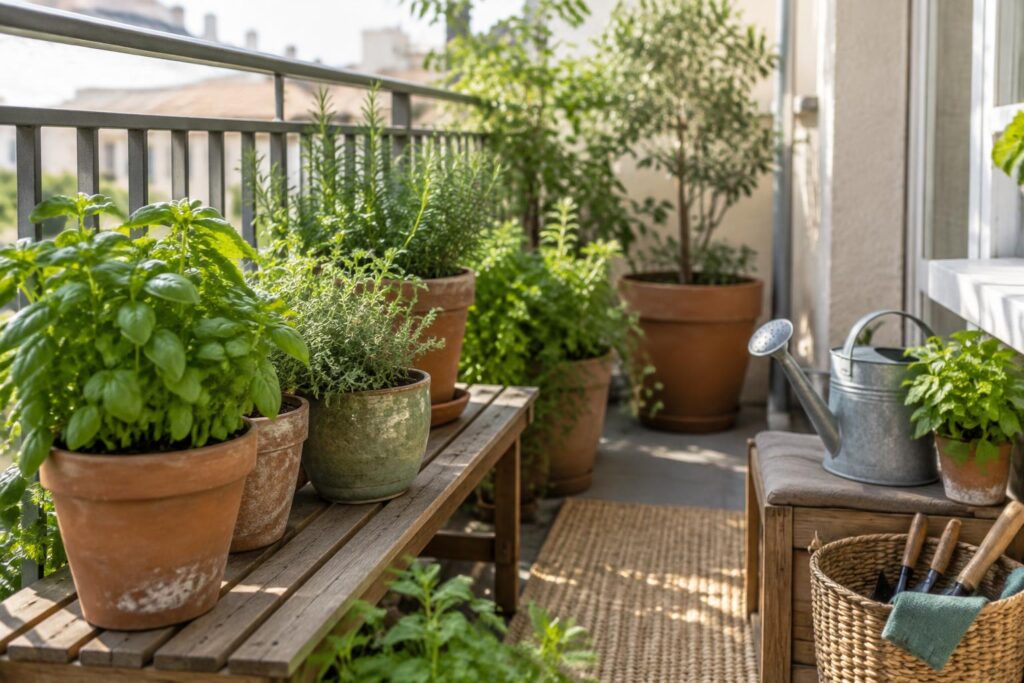
Begin With the Balcony Conditions You Have
A successful balcony herb garden begins with observation rather than a shopping list. Notice where direct sun falls, how long it stays, and whether nearby buildings, railings, or trees create shifting shade. Many culinary herbs prefer bright conditions, but their tolerance for intense afternoon heat can vary, especially in exposed containers. Wind also matters because it can dry potting mix quickly, damage tender stems, and make tall plants unstable. Check whether the balcony is sheltered or open, and keep local weather patterns in mind. If you rent, review building rules before attaching planters to railings or adding heavy items. Choose a setup that fits the available space and remains easy to reach for routine care.
Think about how the garden will function alongside daily life. Leave a clear walking path, avoid blocking doors, drains, or emergency access, and position containers where spilled water will not cause problems. A small group of pots near the kitchen door may be more useful than a crowded display at the far end of the balcony. Consider the weight of containers after watering, particularly when using large ceramic pots or raised planters. If you are uncertain about what a surface or railing can support, use lighter containers on the floor and seek appropriate building guidance. Start with a modest number of plants so you can learn how the light, wind, and moisture conditions affect them.
Choose Containers That Support Healthy Roots
Containers should suit both the plant and the balcony. Every pot needs drainage holes so excess water can leave the root zone; a decorative cachepot without drainage is not a substitute. Use saucers or trays where needed to protect surfaces, but empty standing water after watering so roots are not left constantly saturated. Select a container with enough width and depth for the plant’s expected root growth, rather than forcing several herbs into one cramped pot. Individual pots make it easier to adjust light and watering for different plants. Larger containers generally hold moisture more steadily than very small ones, which can be helpful in warm, breezy locations.
Material affects maintenance. Terracotta is breathable and can dry more quickly, while glazed ceramic, plastic, metal, and composite containers may retain moisture differently or heat up in strong sun. There is no single best choice; match the container to the exposure and the attention you can give it. Raise pots slightly on feet or a low stand if water needs to move freely beneath them, but make sure the arrangement is stable. Place the heaviest containers first and avoid creating a tipping hazard near edges. Keep gardening tools, fertilizers, and plant products secured away from children and pets, and follow each product label rather than improvising treatments.
Use Potting Mix and Plant Selection Wisely
Fill containers with a clean, well-draining potting mix formulated for containers instead of dense soil dug from a garden bed. Garden soil can compact in pots, limiting air around roots and making water movement uneven. Moisten the mix lightly before planting so it settles around roots without becoming muddy. Set each plant at roughly the same depth it was growing in its nursery container, then press the mix gently to remove large air pockets. Leave a little space below the rim for watering. If the mix sinks noticeably over time, add more potting mix rather than burying stems or covering the plant’s crown too deeply.
Choose herbs according to light and intended use, but verify the identity of every plant from a reliable label or knowledgeable local source before harvesting. Do not assume an ornamental plant is edible because it resembles a culinary herb. Begin with a few plants you expect to use, rather than selecting many unfamiliar varieties. Group plants with similar needs when possible, while recognizing that even similar herbs may respond differently to heat, shade, and container size. Inspect new plants for signs of pests or disease before placing them close to established pots. If a plant is struggling, isolate it from others while you assess light, moisture, drainage, and visible damage.
Water According to Moisture, Weather, and Growth
Avoid a fixed watering calendar. Container plants need water based on the dryness of the potting mix, the container size, the weather, the season, and the plant’s growth. Check moisture with a finger a short distance below the surface, or lift a small pot to compare its weight when wet and when drier. Water slowly until moisture reaches the root zone and a little excess runs through the drainage holes. Then allow the mix to dry to a level appropriate for the plant before watering again. Extremely dry mix can repel water, so water gradually in stages if needed rather than flooding the pot all at once.
Morning watering is often practical because leaves can dry in daylight, but the condition of the mix should guide the timing. Hot, windy days may require more frequent checks, while cool, cloudy periods often slow moisture loss. Yellowing, drooping, or browning leaves can have several causes, including too much water, too little water, poor drainage, heat stress, or natural aging. Look at the roots, potting mix, and placement before assuming the problem has one cause. Use a watering can with a controlled spout to limit runoff on shared balconies. Keep water away from electrical outlets and cords, and never use damaged electrical equipment outdoors.
Harvest, Maintain, and Refresh the Display
Harvesting can help many culinary herbs stay compact when it is done thoughtfully. Take small amounts regularly from healthy growth instead of stripping a plant bare, and avoid removing more than it can readily replace. Pinching or cutting above a leaf junction often encourages a fuller shape, but use clean scissors or snips and avoid tearing stems. Remove yellowed leaves, spent flowers, and fallen debris from the pot surface to improve the garden’s appearance and make problems easier to notice. Wash harvested herbs carefully before food use, especially if the balcony is exposed to dust, animals, or nearby construction activity. Do not eat any plant that has been treated with a product not labeled for edible plants.
Set aside a short weekly check for drainage, moisture, pests, broken stems, and container stability. Rotate pots occasionally if one side receives much stronger light, but do not move plants constantly unless conditions require it. As plants grow, reassess spacing so foliage has airflow and containers do not trap water beneath crowded leaves. Replace exhausted seasonal plants, refresh the top layer of potting mix when appropriate, and clean empty pots before reusing them. A balcony herb garden does not need to look perfect to be useful. With sensible placement, attentive watering, and gradual adjustments, it can become a pleasant, practical part of a small outdoor space.