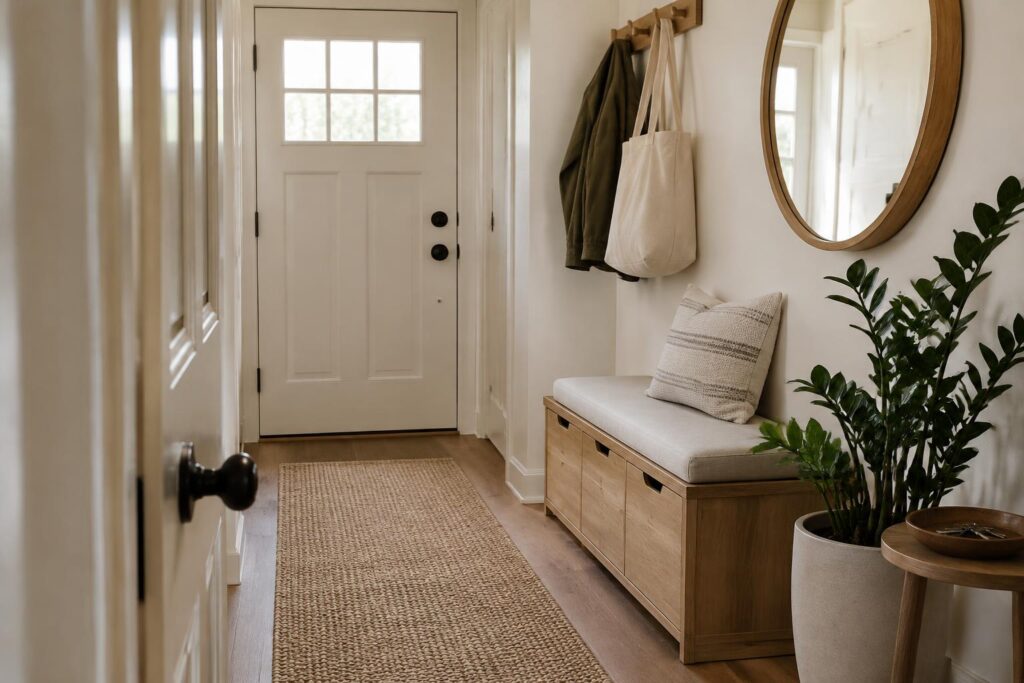
Start With the Way the Entry Is Used
Small entryway storage works best when it responds to real routines rather than trying to display every item beautifully. Stand at the door and notice what enters with you: keys, bags, shoes, umbrellas, mail, pet accessories, coats, or children’s outdoor gear. Then identify the path people need to take from the door into the home. A narrow hall, shared apartment entrance, or doorway that opens inward has different limits from a spacious foyer. Keep the main passage clear enough for people to enter, turn, and carry groceries without bumping into furniture. This first observation prevents a common mistake: buying an attractive cabinet that makes the entrance harder to use.
Sort entry items into three groups before adding storage. Daily essentials deserve the easiest locations, such as a hook, shallow tray, or open basket near the door. Frequently used but bulkier things, including everyday shoes and bags, can go beneath a bench or inside a slim cabinet. Occasional items, such as spare umbrellas, seasonal scarves, or reusable shopping bags, should move to a nearby closet or another room if the entry is tight. Limiting the entry to current needs makes it easier to reset each day. It also helps renters and homeowners avoid turning the doorway into a long-term holding area for parcels, paperwork, and objects that belong elsewhere.
Choose Furniture That Protects Floor Space
Measure the available wall length, depth, door swing, baseboards, outlets, and nearby vents before choosing a bench, console, or shoe cabinet. In compact spaces, depth often matters more than width. A slim wall-mounted shelf or shallow closed cabinet may offer useful landing space without forcing people to squeeze past it. If a bench fits, choose one with a smooth, sturdy surface and storage that is simple to access. Open cubbies make daily shoes quick to grab but can look busy; doors or baskets hide visual clutter but require room to open and a habit of putting things away. Leave enough open floor in front of furniture to use it comfortably.
A mirror can make a small entrance feel brighter and provides a practical final check before leaving, but it should not replace needed storage. Pair it with a narrow shelf or wall-mounted ledge for keys and glasses, using a tray to define what belongs there. Wall hooks are another efficient option when installed securely into suitable supports according to the hardware instructions. Place hooks at heights that work for the household, while keeping heavy bags off delicate hooks and out of a walkway. In homes with young children or active pets, avoid low hooks that create snagging hazards, and make sure tall freestanding furniture is stable and appropriately secured where necessary.
Build Simple Drop Zones for Everyday Items
A drop zone is a designated home for an object at the moment it enters the house. The most useful one is often a small tray or bowl for keys, access cards, and earbuds. Choose a tray with a raised edge so small objects do not roll onto the floor, and place it on a stable surface away from the very edge. Keep only entry-related items there; receipts, batteries, and miscellaneous coins quickly turn a helpful tray into clutter. A labeled mail sorter can also work if paper regularly accumulates, but give it a clear purpose: incoming mail, items to review, and outgoing mail. Review it routinely instead of treating it as permanent paper storage.
Shoes need a system that reflects how they are used and how much moisture they bring inside. A washable mat or tray near the door can catch dampness and grit, particularly during wet weather, while a nearby rack or cabinet holds the pairs currently in rotation. Let muddy or wet footwear dry in a ventilated place before enclosing it in a cabinet, since trapped moisture can create odors and affect nearby materials. Avoid piling every pair owned by the household at the entrance. Store off-season and special-occasion footwear elsewhere, and periodically remove pairs that no longer fit, are damaged beyond practical repair, or have not been used for a long time.
Use Light, Color, and Durable Details
Decorating a small entryway does not require many objects. Start with a restrained palette drawn from the adjoining room so the doorway feels connected rather than crowded. Light wall colors, a reflective mirror, and good ambient lighting can make a narrow space feel more open, but darker shades can also feel inviting when balanced with adequate light and clear surfaces. If the entry lacks daylight, use a properly installed light fixture or a plug-in lamp only where cords can be managed safely and kept out of traffic paths. For electrical changes beyond basic, safe use of existing outlets, consult a qualified professional rather than improvising wiring or overloaded connections.
Choose finishes that can handle the demands of an entrance. A low-pile runner, washable mat, or durable rug pad can help define the area and protect flooring, but it should lie flat and have edges that do not curl into a tripping risk. Wood, metal, sealed surfaces, and washable baskets are often easier to wipe down than delicate fabrics, though the right choice depends on household use and local weather. Add personality through one or two elements, such as framed art placed securely, a textured basket, or a small plant in a stable container. Avoid overcrowding narrow surfaces with décor that competes with the practical landing areas the room needs.
Maintain the System and Adjust It Seasonally
An organized entry stays useful through small, repeatable resets. Once or twice a week, return stray items to their proper rooms, empty the key tray of nonessential objects, shake out or vacuum the runner, and check that shoes are not blocking the door. Wipe hard surfaces when dirt, moisture, or sticky marks appear, using cleaning products as directed on their labels and for the specific material. Never combine cleaning chemicals, even if each product is commonly used on its own. Address water from umbrellas, shoes, or wet coats promptly to protect flooring and prevent a damp pile from building up near the door.
Seasonal changes are a good cue to reassess capacity. Rotate bulky coats, boots, sun hats, or rain gear so only what is currently needed occupies the most accessible spots. Check hooks, baskets, furniture feet, and door clearance for wear, looseness, or new obstructions. If the household’s routine changes, adjust the setup instead of forcing the old system to work. For example, a new school bag may need a dedicated hook, while a rarely used console table may be better replaced by a narrower shoe cabinet. The goal is not a perfectly styled entrance at every moment; it is a safe, easy-to-maintain transition space that helps the household leave and return with less friction.