Why Drainage Matters in Every Container
Container garden drainage is the movement of extra water out of a pot after rain or watering. It matters because plant roots need both moisture and air. In a garden bed, water can usually move through a broad area of soil. A container has solid sides and a limited volume of growing medium, so water can remain around the roots when the pot, mix, or saucer slows its escape. Roots kept constantly wet may struggle to take in oxygen, and the plant can become less vigorous. Yellowing leaves, soft stems, a sour smell from the mix, and slow drying can all signal excess moisture, although they can also have other causes. Good drainage does not mean allowing a plant to become dry all the time. Instead, it creates a balance in which the potting mix can hold useful moisture while surplus water has a clear route away.
Drainage needs vary with the plant and its setting. A moisture-loving plant may tolerate a mix that stays evenly damp, while a cactus or many Mediterranean herbs need a faster-drying environment. A pot on a covered porch dries differently from one exposed to wind and rain. Indoors, lower light and cooler temperatures can slow water use; outdoors, sun, heat, and airflow can speed it up. The season also changes the pattern. Rather than following a fixed watering timetable, observe the mix, the plant, and local conditions. Check whether the upper layer has dried to a depth appropriate for that species, then feel the pot’s weight and look for healthy growth. This approach helps you adjust watering without assuming that every container needs the same treatment.
Choose Pots That Let Water Escape
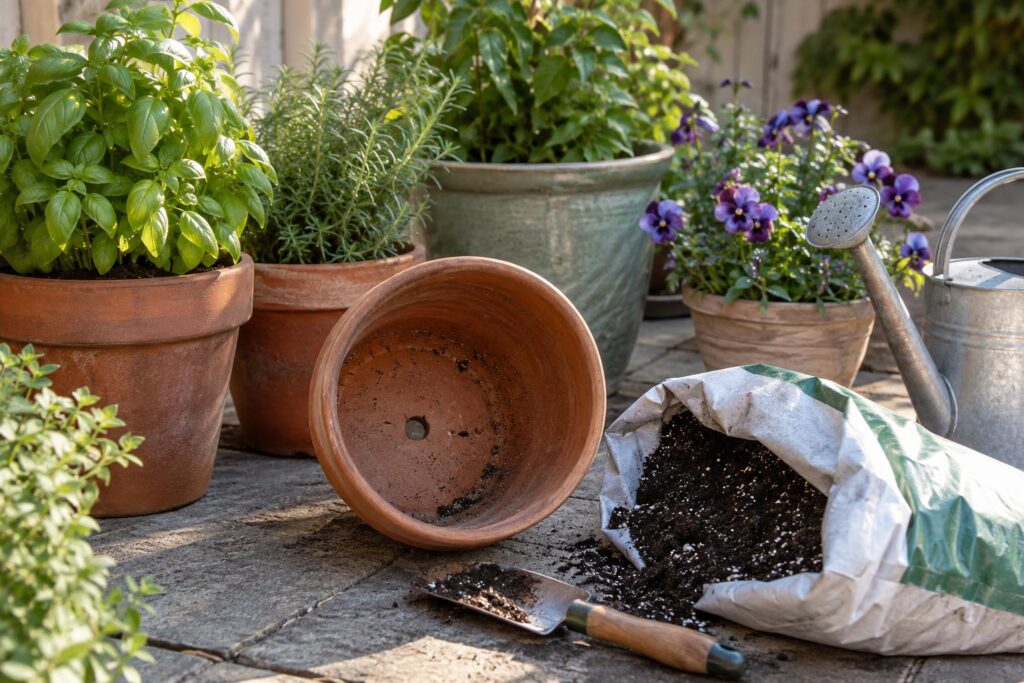
Start with a container that has one or more open drainage holes at its base. These holes should be large enough to release water freely but not so exposed that potting mix immediately washes away. A curved piece of mesh, a coffee filter, or a purpose-made pot screen can rest over the hole to hold back mix while still allowing water through. Avoid sealing holes with tape, glue, or an unbroken decorative liner when planting directly into a pot. If a favorite vessel has no holes, use it as a cachepot: keep the plant in a separate nursery pot with drainage, place it inside the decorative vessel, and remove it for watering. Empty any collected water before returning the plant so the inner pot does not stand in it.
Material affects how quickly a container dries, though it does not replace drainage holes. Unglazed terracotta is porous and often allows moisture to evaporate through its walls, which can suit plants that prefer a drier root zone. Glazed ceramic, plastic, metal, and sealed composite pots typically retain moisture longer. Lightweight pots are convenient for balconies and renters who may move plants, but a tall plant can make them unstable in wind. Choose a pot with a broad enough base, or place it where it cannot tip. For a large container, confirm that a deck, shelf, railing system, or indoor surface can safely support the filled weight. Do not create drainage by drilling into a container unless its material, structure, and manufacturer guidance make that appropriate; cracked ceramic and unstable containers are poor candidates for alteration.
Use a Growing Mix Designed for Pots
Potting mix is different from ordinary garden soil. A quality container mix is formulated to hold moisture and nutrients while leaving spaces for air and water movement. Garden soil can become dense inside a pot, especially after repeated watering, and it may drain poorly. For most ornamental plants, vegetables, and herbs in containers, begin with a fresh potting mix suited to general container use or to the crop type. Products labeled for cacti and succulents are usually more free-draining, while mixes designed for moisture-loving plants may retain water longer. Read the label to understand the intended use and any handling directions. If a particular plant has specialized needs, consult reliable plant-care guidance rather than assuming one mix will suit every species.
Do not add a thick layer of gravel, broken pottery, packing peanuts, or other filler beneath the potting mix to improve drainage. This can reduce the depth available for roots and may leave water held higher in the container rather than solving a drainage issue. Fill the pot mostly with appropriate mix, leaving enough space below the rim to water without overflow. For a very large pot, select a size that genuinely suits the plant instead of filling unused depth with improvised materials. If weight is a concern, choose a lighter container or grow a smaller plant. Compost can be useful as a component of a suitable mix or as a surface amendment when mature and well handled, but heavy amounts of dense homemade material can change how a container holds water. Keep the blend airy and observe its drying behavior over time.
Plant and Water Without Compacting the Root Zone
When planting, gently loosen circling roots only when they are tightly bound, and place the root ball at roughly the same depth it occupied before. Add mix around it in small amounts, lightly settling it with your fingers rather than pressing hard. Excessive compaction removes air spaces that support drainage and root health. Leave a small watering gap beneath the rim, then water slowly enough for the mix to become evenly moist. Water should eventually emerge from the drainage holes, but a quick stream down the side of a dry root ball may indicate that the mix has not absorbed water evenly. Pause briefly and water again more gradually. For indoor plants, set the pot in a sink, tub, or protected tray during watering when practical, then allow it to drain before placing it back on furniture or flooring.
Saucers and trays protect surfaces, but they should not turn into permanent reservoirs. After the pot has drained, discard standing water unless the plant’s specific care requirements and setup clearly call for a different method. Outdoor pots raised slightly on pot feet, bricks designed for that purpose, or a stable slatted stand can help keep holes from being blocked by a flat patio surface. Ensure the support is level and secure, particularly where children, pets, or foot traffic are present. Avoid placing containers where runoff creates a slipping hazard or stains a delicate surface. Use a watering can with controlled flow for small pots, and inspect hoses, connectors, and outdoor taps before use. Keep electrical cords and powered equipment away from watering areas, and follow manufacturer instructions for any irrigation equipment.
Diagnose Slow Drying and Maintain the Setup
If a pot stays wet much longer than expected, investigate before adding fertilizer or making several changes at once. First, check that drainage holes are open and that the pot is not sitting in trapped water. Look at the light level, temperature, recent rainfall, and plant size: a small plant in a large pot uses little water, and a shaded plant often dries slowly. Carefully slide the root ball from the pot if the plant is struggling and the medium remains saturated. Dark, soft, or foul-smelling roots can indicate a serious problem, while firm roots are generally a better sign. Remove only clearly dead material with clean tools, repot into fresh appropriate mix if needed, and select a container that fits the remaining root system. If symptoms are severe or a valuable plant is involved, a local qualified horticultural professional can help assess it.
Routine maintenance keeps container garden drainage dependable. At the start of each growing season, examine pots for cracks, blocked holes, brittle supports, and compacted mix. Clear debris from holes with a blunt tool while the pot is empty or while working gently around established roots. Refresh or replace potting mix when it has broken down, shrunk substantially, or no longer rewets and drains evenly. Group plants with similar light and moisture preferences so watering decisions are simpler, but still check each pot individually. Move seasonal containers gradually when changing their sun exposure, since a sudden shift can alter drying speed and stress foliage. Finally, keep plant choices compatible with the available light, local climate, and container size. Thoughtful matching of plant, pot, mix, and location is the most reliable way to support healthy roots without relying on a rigid schedule.