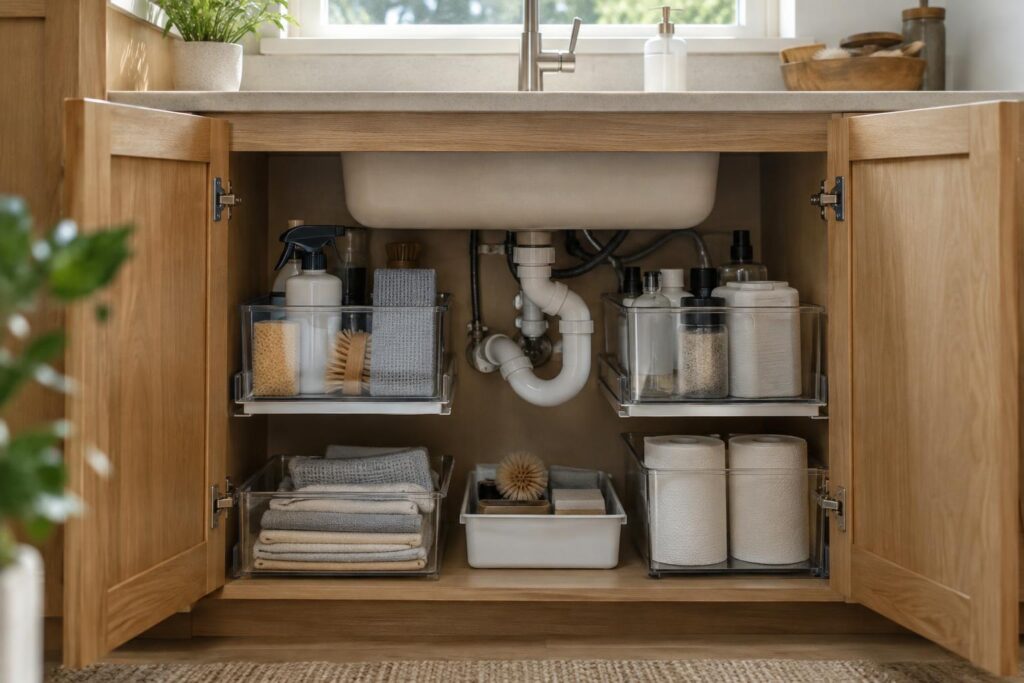
Start With the Cabinet You Actually Have
Under-sink storage is often difficult because the cabinet was designed around plumbing rather than around household supplies. Water lines, drainpipes, shutoff valves, garbage-disposal components, or filtration equipment can divide the space into awkward sections. Before buying containers or organizers, empty the cabinet completely and inspect it with the doors open. Note where pipes pass through the back or floor, where the valves sit, and whether anything drips, rusts, or shows signs of moisture. A cabinet that has an active leak, swollen base panel, mold-like growth, or a damaged pipe needs attention before it becomes an organizing project. Keep access clear for any feature that may need routine checking or quick shutoff.
Sort the items you removed into practical groups, such as dishwashing supplies, surface-cleaning products, trash bags, reusable cloths, and occasional maintenance items. Discard empty containers and relocate products that do not belong near a sink. For example, spare paint, batteries, food, medications, and personal-care products usually need storage suited to their own temperature, safety, or accessibility needs. Wipe the cabinet interior with a cleaner appropriate for the cabinet material, following the product label. Dry it thoroughly. A simple waterproof cabinet liner or shallow mat can help contain minor spills and make cleaning easier, but it is not a solution for a plumbing problem. Measure the cabinet width, depth, and height at several points because hinges, pipes, and door frames can reduce usable space.
Choose Storage That Works Around Pipes
The best organizers make use of the open areas around plumbing instead of trying to conceal or compress it. Low bins can sit on either side of a drainpipe, while narrow vertical containers can use space near the cabinet walls. Open-top bins are useful for groups of bottles because they can be lifted out as a unit for cleaning or restocking. Pull-out drawers can improve access in deep cabinets, but select models with a cutout or adjustable configuration if pipes occupy the center. Test the movement of a drawer before fastening anything in place. It should slide without catching a water line, pressing against a valve, or blocking the cabinet door from closing.
Not every cabinet needs a complex system. In a small rental, two handled bins and a door-mounted holder may be more useful than installed hardware. In a larger kitchen, a combination of a shallow tray for sponges, a bin for dishwashing supplies, and a separate container for bags may create clear zones without crowding the space. Choose smooth, washable materials that tolerate occasional dampness. Avoid storing cardboard boxes directly on the cabinet floor because they absorb moisture and make leaks harder to notice. If you use adhesive hooks or door organizers, check the manufacturer’s instructions and the cabinet surface first. Heavy items can pull loose attachments away from the door or interfere with hinges.
Create Safer Zones for Cleaning Supplies
Store cleaning products upright, with lids and spray nozzles fully closed. Keep each product in its original container so the label, directions, and safety information remain available. Do not combine leftover products in a single bottle, even if they appear similar. Some household cleaners can release harmful fumes or react dangerously when mixed. Use products only as directed on their labels, provide ventilation when a label calls for it, and avoid placing chemicals where children or pets can reach them. If the cabinet is accessible to young children, consider a reliable cabinet lock that is compatible with the door style and still permits adults to access plumbing controls when necessary.
A useful under-sink storage layout separates cleaning tools from chemical products. For example, place sprays and concentrates in one stable bin, dry microfiber cloths in another, and scrub brushes in a washable upright caddy. This separation reduces the chance that damp tools will rest against product labels or bottle caps. Do not keep electrical appliances, extension cords, or battery-powered items in a cabinet that may become wet. Likewise, avoid packing the cabinet so tightly that a leaking bottle cannot be seen or removed. A modest amount of empty space is functional: it lets you identify what you have, wipe up spills promptly, and take out one item without knocking over several others.
Make Daily Tasks Easier to Maintain
Arrange supplies according to how often you use them. Everyday dish soap, dishwasher tablets, or sink-cleaning materials should be near the front and easy to grasp. Reserve the back corners for items used less often, such as replacement sponges or a backup bottle of a familiar cleaner. Limit duplicates when possible. An overloaded cabinet tends to hide supplies, leading people to open new products before existing ones are used. A small tray can hold the current sponge, brush, and sink stopper neatly, while a ventilated holder can help wet tools dry between uses. If the cabinet has a trash or recycling bin, leave enough clearance to remove it without scraping bottles or catching plumbing parts.
Labels can support a simple system, especially in a shared household, but they do not need to be elaborate. Label the bin by category, such as “dishwashing,” “wipes,” or “bags,” rather than labeling every individual object. This gives the system flexibility when brands or package shapes change. Clear bins let you see contents at a glance, whereas opaque bins can look calmer and hide visual clutter; either option works when categories are consistent. Consider using a small inventory rule: keep one active item and one backup for frequently used essentials, then reassess before adding more. This approach is especially helpful in narrow cabinets where excess stock quickly consumes the room needed for daily items.
Inspect and Refresh the System Regularly
An organized under-sink cabinet needs brief maintenance because it sits beside water and collects frequently used supplies. Every few weeks, look for drips beneath pipe joints, dampness on the liner, loose spray triggers, and residue around bottle caps. Check that shutoff valves remain visible and reachable. If you notice persistent moisture, an unfamiliar odor, a cabinet base that feels soft, or water damage extending beyond the cabinet, stop treating the issue as a storage concern. Plumbing repairs may require a qualified professional, particularly when connections are damaged, access is limited, or the source of a leak is unclear. Do not force valves or dismantle plumbing components unless you understand the equipment and can do so safely.
Refresh the organization as household routines change. A move from hand-washing to dishwasher use, the arrival of a pet, or a seasonal cleaning routine may alter which supplies deserve the most accessible locations. Remove items you no longer use, wash bins when spills occur, and replace liners that have become brittle or stained. When selecting new products, consider whether their shape and storage requirements fit the cabinet before bringing home large quantities. The goal of under-sink storage is not to fill every inch with accessories. It is to create a clean, visible, safe arrangement that supports ordinary kitchen or bathroom tasks while leaving plumbing components accessible for observation and service.